How to Choose a Light Stand: Height, Load Capacity and Base Explained
By Photomax · 28 Nov 2026 · 2 min read
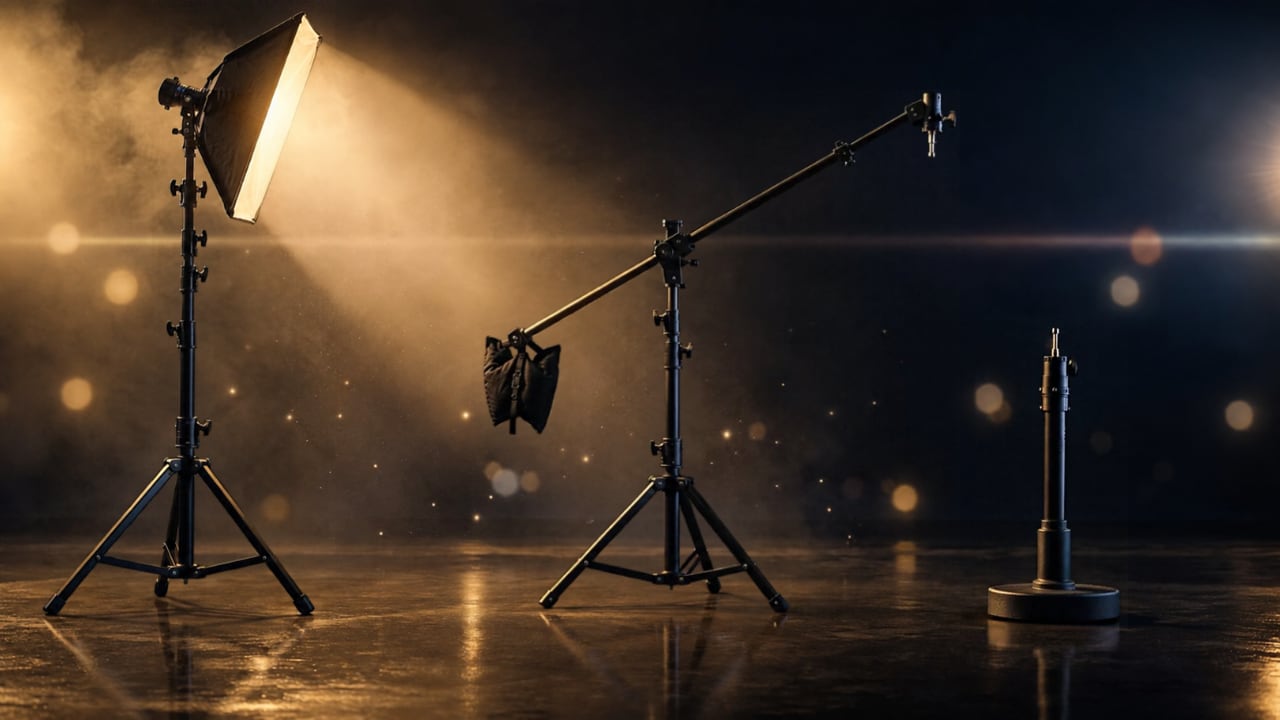
A light stand is the least exciting piece of kit and the one that causes the most problems when you choose badly. A stand that is too short, too weak or too wobbly will ruin shoots and can damage your light. This guide covers what actually matters.
1. Maximum height
Check the maximum height with all sections fully extended, and remember that the usable height is lower once you add a light and a softbox on top. For a person sitting at a desk, a stand of around 2 metres is usually enough. For standing portraits or lighting from above you may want 2.5–3 metres. The folded length matters too if you travel with the stand.
2. Load capacity
The stated load capacity is the maximum weight the stand is designed to carry. Add up the weight of the light, the softbox or reflector, the ball head or adapter and any battery. Leave a safety margin: a stand that carries 80 per cent of its limit is much steadier than one at 100 per cent.
3. The base: tripod legs or a flat round base
- Tripod legs fold flat and spread wide, which suits travel and uneven floors.
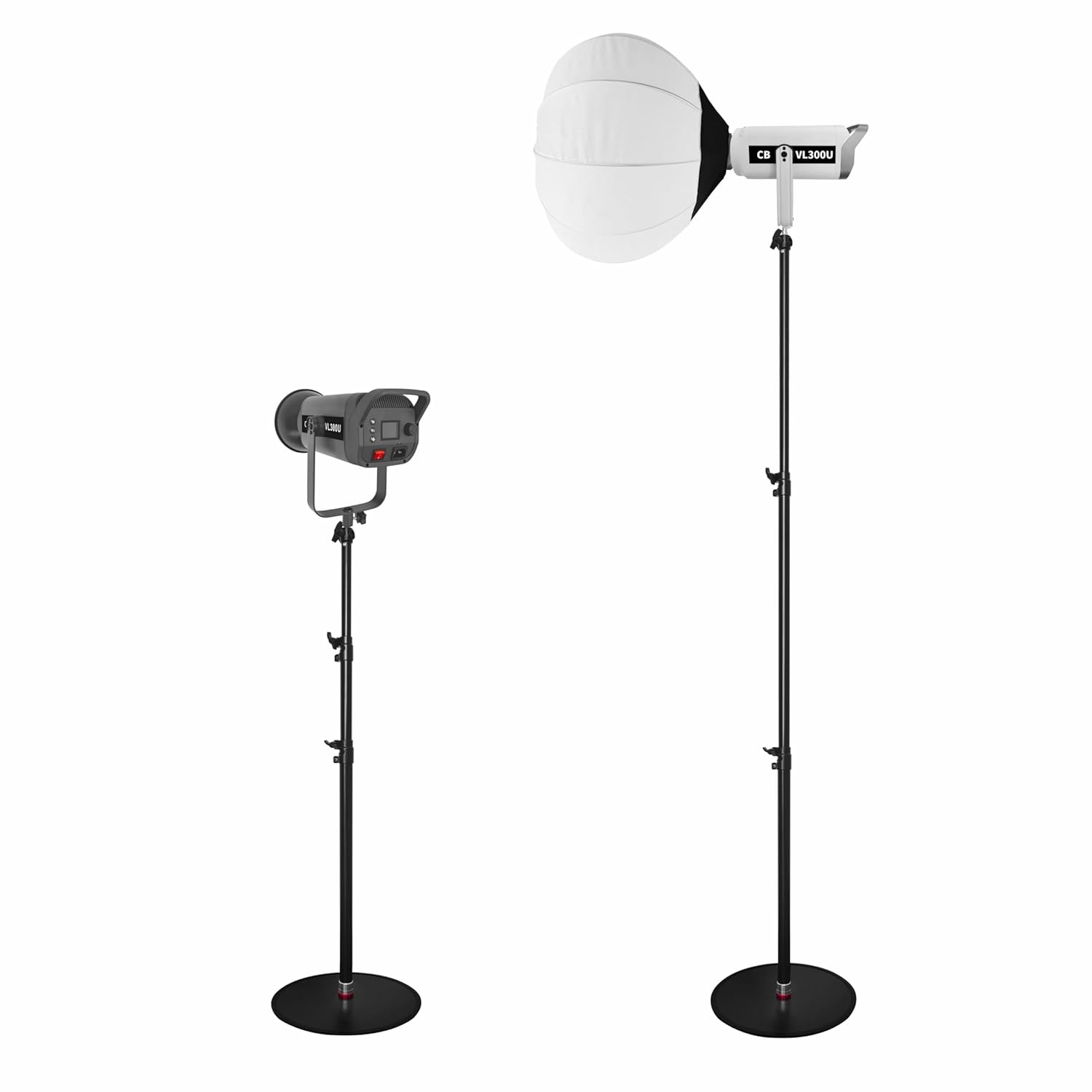
- A heavy flat or round base takes less floor space and is very stable on smooth floors, which suits small rooms and studios.
- In both cases, a sandbag over the base adds a lot of stability, especially with a softbox, which catches air like a sail.
4. Material
Aluminium alloy stands are light and do not rust, which makes them good for most photographers. Steel is heavier and sturdier but harder to carry. For a permanent home studio the weight of a steel stand is an advantage; for shooting on location it is a disadvantage.
5. When you need a boom arm
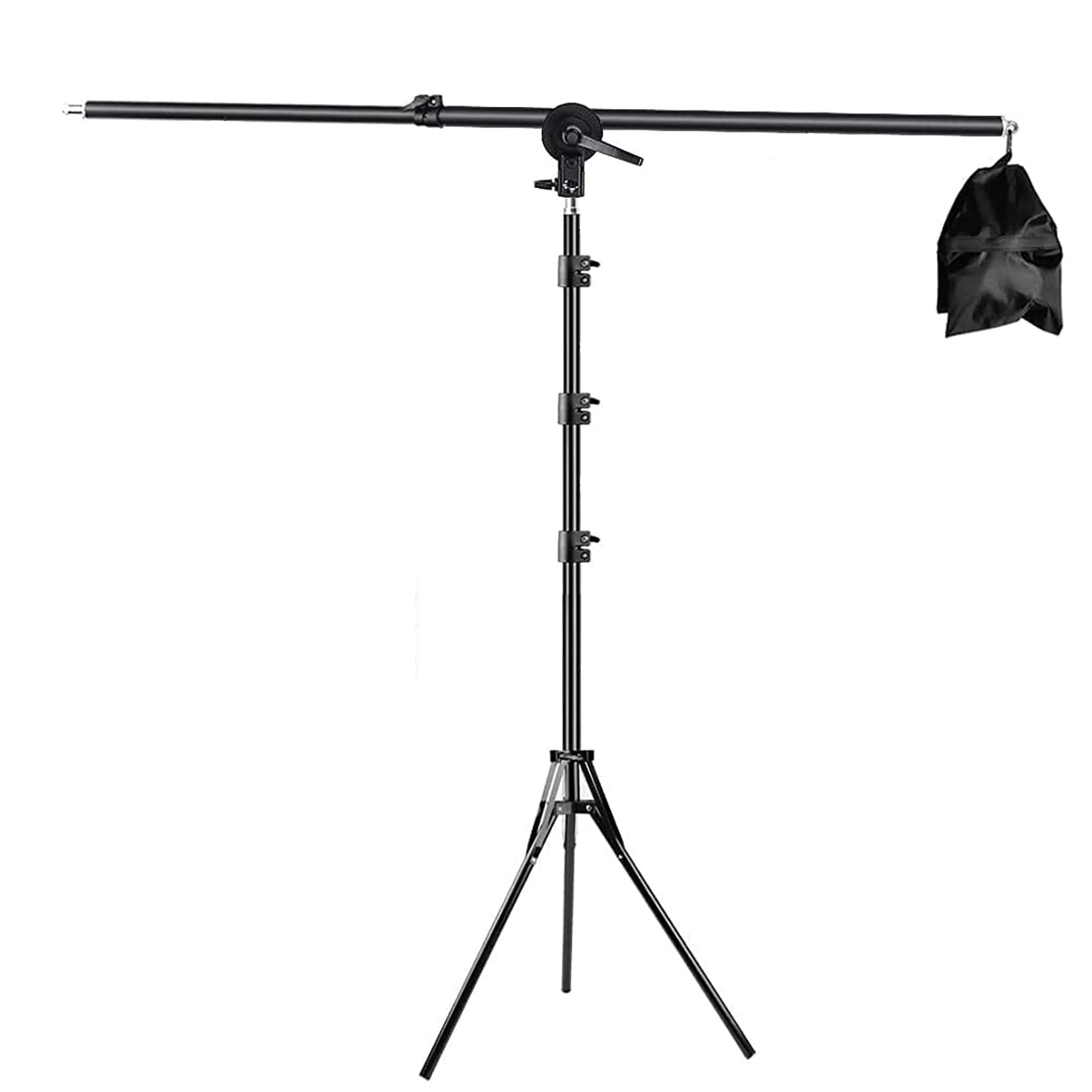
A boom arm lets you place a light directly above a subject without a stand in the shot. It is useful for hair lights, tabletop and product photography. Always put a sandbag on the counterweight end and keep the arm balanced. An overhead desk mount does a similar job for cameras and phones that need to look straight down at a table.
Common mistakes
- Buying a stand by price alone without checking load capacity.
- Using a softbox without a sandbag outdoors or near a fan.
- Extending the thinnest section first. Extend the thickest sections first and the thinnest last.
- Not tightening the clamps fully. Check them before every shoot.
- Placing the stand on a slope or on a rug where the legs can slide.
Below are stands, boom arms and mounts from our catalogue. Use the height and load numbers on each product page to compare them with your light.
Gear mentioned in this guide
Tripod & Stand
PHOTOMAX Heavy Duty Light Stand – 85-180cm Aluminum Floor Stand, 20kg Load
Backdrops & Studio Setup
PHOTOMAX 9 FT Light Stand with 4.5 FT Boom Arm & Sandbag – Softbox Tripod Set
Tripod & Stand
PHOTOMAX 9 Feet Aluminum Studio Light Stand – Lightweight & Portable Tripod
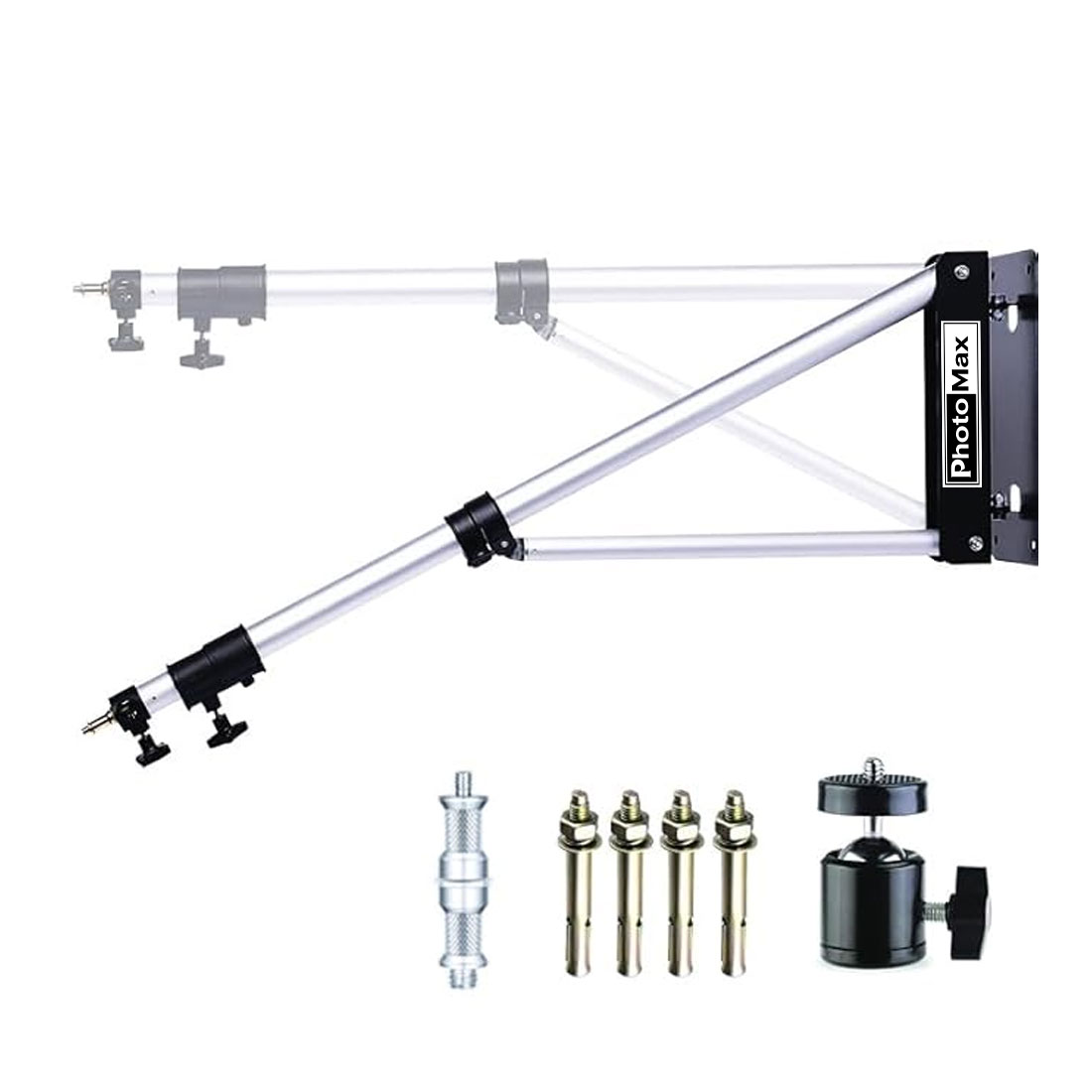
Backdrops & Studio Setup
PHOTOMAX Wall Mount Boom Arm for Studio Strobe Lights – 56 inch, Rotatable
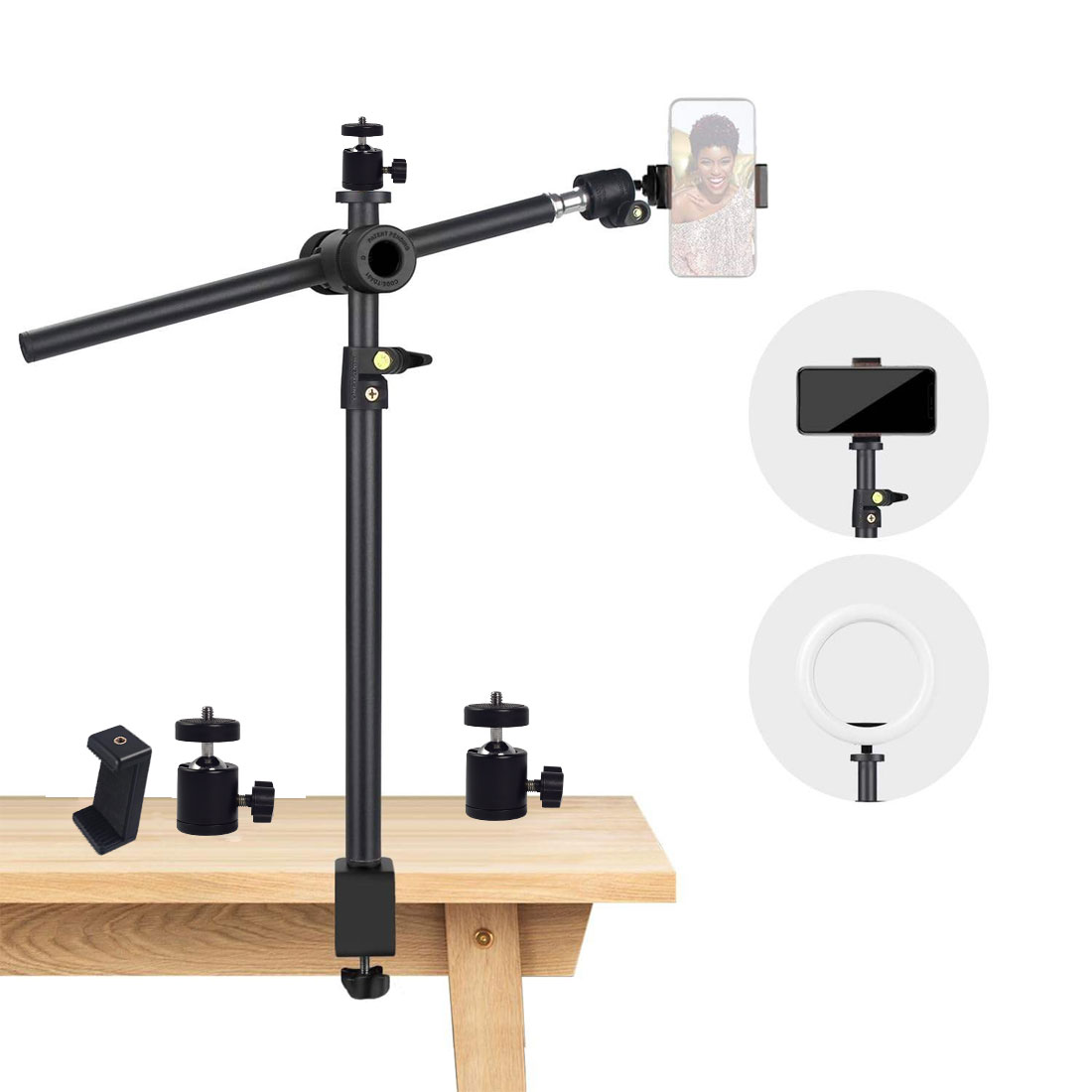
Tripod & Stand
PHOTOMAX Overhead Camera Mount Desk Stand – C-Clamp Magic Arm for Webcam
Tripod & Stand
PHOTOMAX Overhead Desk Mount – Tabletop C-Clamp Stand for DSLR, Ring Light (CM02)
Not sure what suits your setup?
Tell us what you shoot and your budget and we'll suggest a kit that works together.
Get a kit recommendation